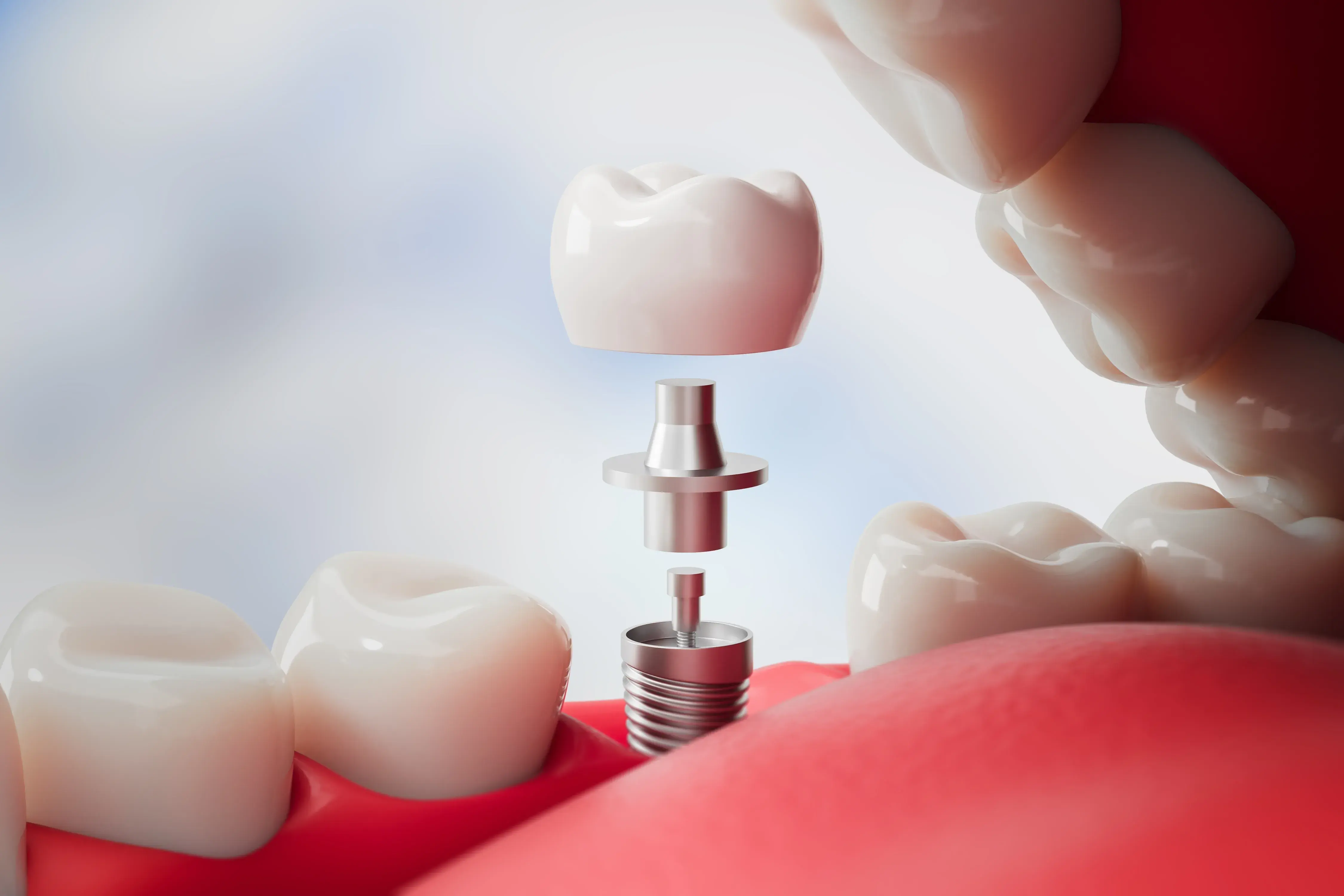
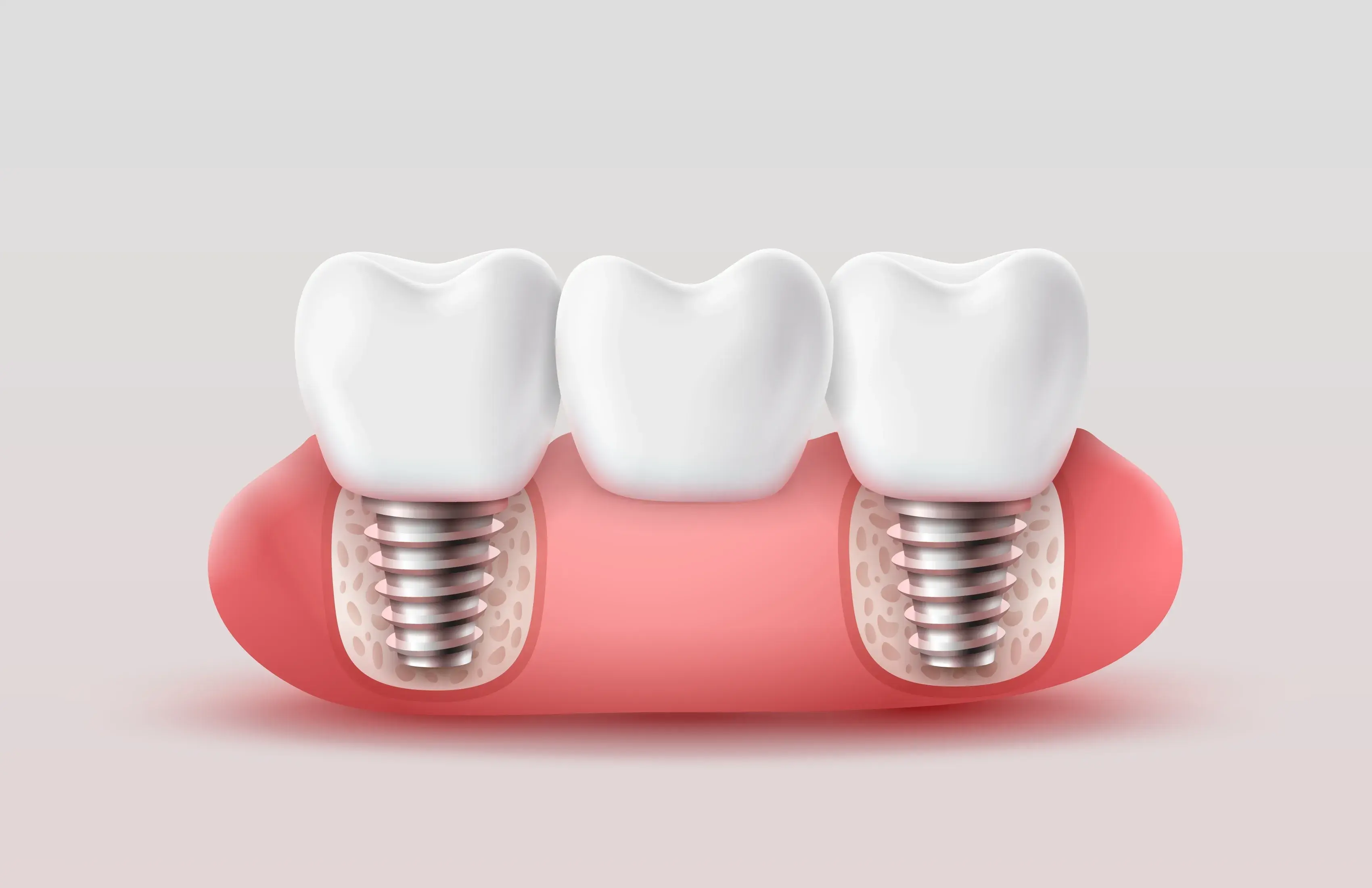
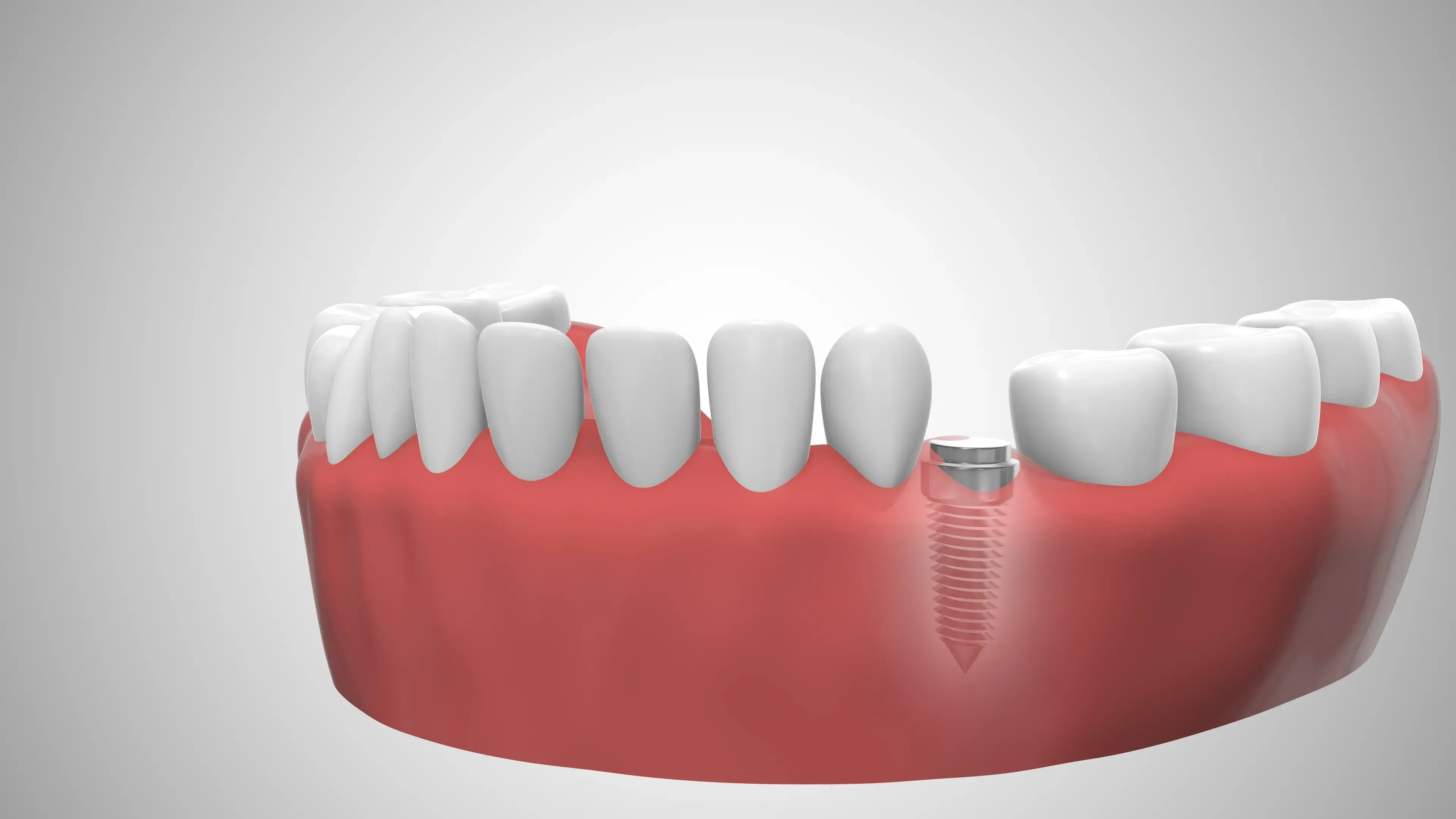
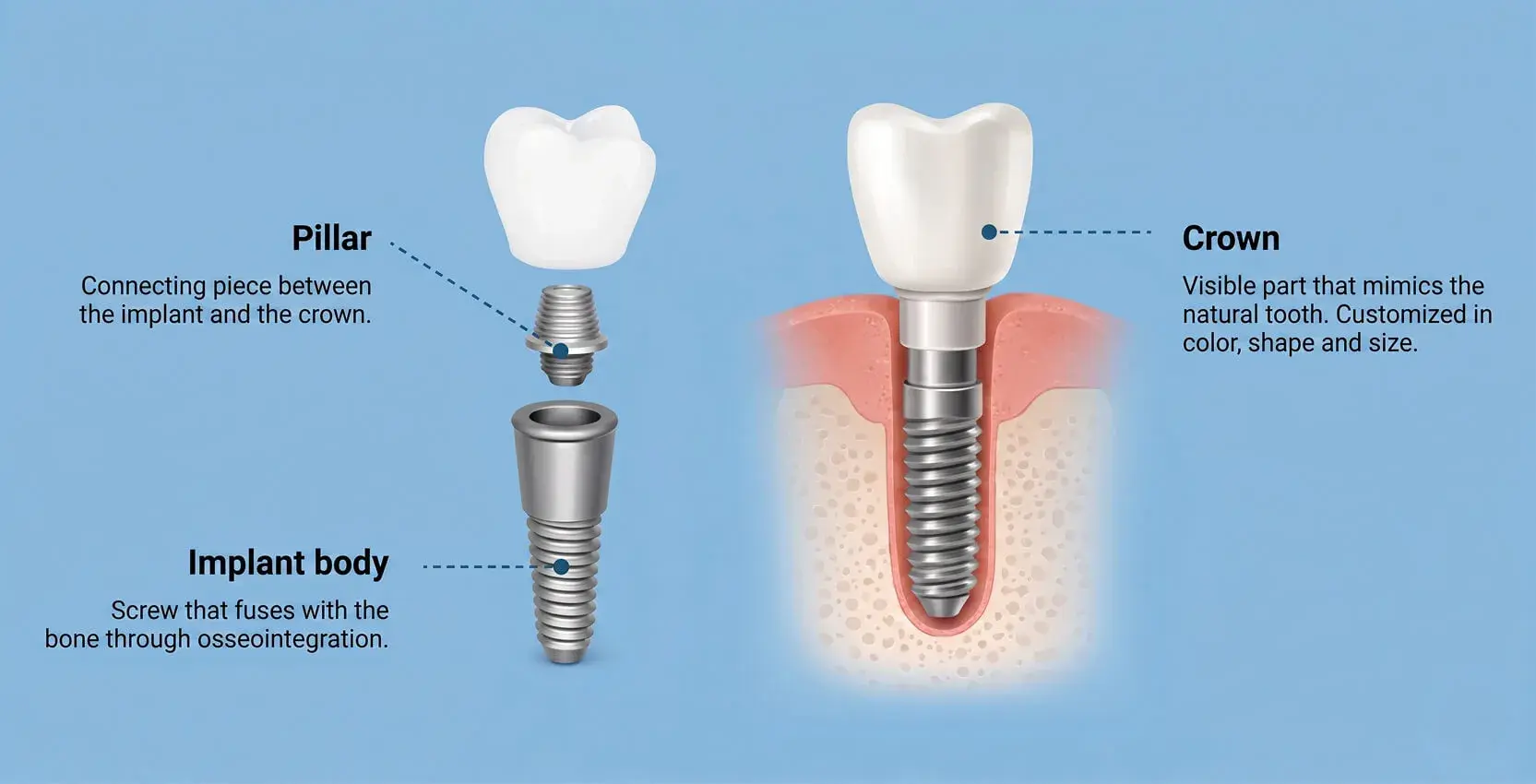
Types of dental crowns on implants.
There are two types of crowns for implants based on the material they are made of:
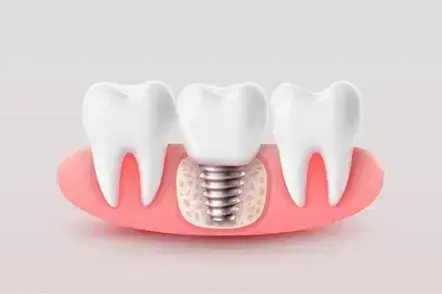
Metal-porcelain crown
They incorporate a metal structure coated with porcelain to resemble a natural tooth, although their translucency is limited. If gum recession occurs, a small metal arc may be visible at the edge. These crowns are recommended for teeth located at the back of the mouth and are more affordable.
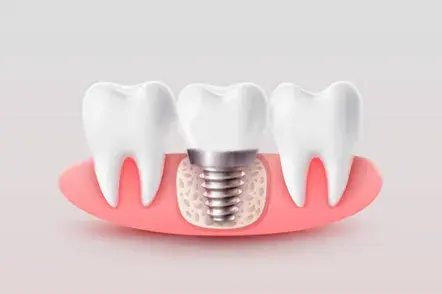
Zirconia crown
Made entirely of zirconia, 100% biocompatible, offering a more aesthetic result, as they are translucent and closely resemble natural teeth.
They are the most common choice for implants in front positions of the mouth and are more expensive.
Advances in titanium implants: nanostructured surfaces
This technique involves modifying the titanium surface at the nanometric level through processes such as acid etching, anodization, bioactive coatings, or laser nanotexturing.
Benefits of titanium implants with nanostructured surfaces
- Better osseointegration: nanotexturing increases the contact surface with the bone, promoting faster and more efficient integration.
- Reduced healing time: thanks to greater cell adhesion, the patient's recovery process is faster compared to traditional implants.
- Greater primary stability: the initial fixation of the implant is improved, reducing the risk of micro-movements that could compromise treatment success.
- Lower risk of infection: the antibacterial treatment of some nanostructured surfaces helps prevent peri-implantitis.
- Increased success rate: better long-term outcomes have been observed in patients who have opted for this type of implant.
This advance in titanium implants is especially useful in patients with low bone density, such as those with osteoporosis or severe bone resorption. It is also used in immediate loading treatments, allowing the rapid placement of the prosthesis and optimizing the aesthetic and functional results of the treatment.
Short implants: a solution for patients with limited bone
These implants, shorter in length than conventional ones, have demonstrated similar success rates, thanks to advances in design and surface treatment.
Advantages of short implants:
- Less invasive, as they avoid the need for additional procedures such as bone grafts.
- Shorter treatment time and faster recovery.
- They have demonstrated a success rate comparable to conventional implants in patients with moderate bone atrophy.
They are an excellent option for patients with bone loss in the upper or lower jaw, where traditional implants might require more complex placement techniques.
Guided bone regeneration: recovering lost bone volume
In some cases, implant placement may be limited by insufficient bone to ensure stability.
This procedure is based on the use of biocompatible membranes and bone graft materials that stimulate the natural regeneration of bone. Over time, the body replaces the graft material with its own bone tissue, providing a solid foundation for the implant.
Benefits of guided bone regeneration:
- Allows implant placement in patients with severe bone loss.
- Improves the stability and long-term durability of the implant.
- Contributes to better implant integration, achieving more satisfactory aesthetic and functional results.