- Salud
Forbidden foods when you wear brackets
-
 Fernando Reguera Sanz
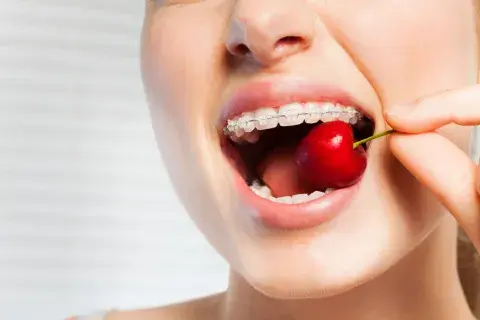
Brackets are the small components stuck to the front or lingual surface of teeth that help to guide them to the position desired by the orthodontist to achieve a correct placement and bite.
Once the brackets have been fitted, it is important to do everything possible to look after them to guarantee that the treatment is carried out without problems and that the best possible results can be obtained.
The brackets and the arches that hold them among each other can be damaged or become loose with excessively hard or sticky foods; accordingly, it is important to avoid chewing hard food, such as meat, bread or raw vegetables. This means preventing them from coming off since, it this happens, the treatment will inevitably last longer.
You also need to avoid sticky foods, such as sweets and chewing gum, and also food that you have to bite with your teeth, such as apples and sandwiches. It is advisable to cut food into small pieces and to use your molars to chew them.
With sugary food and drinks, there is also a greater risk that food remains will get trapped and plaque will accumulate, which may cause tooth decay.
The bands of the brackets, which are placed to join them to the arch, are usually transparent and can also become stained following the consumption of dark food and drink such as coffee or red wine.
The main foods to avoid are:
-
- Chewing gum: it is very sticky and can get trapped among the brackets. It is not a very recommendable food when wearing braces, since cleaning them if the chewing gums gets stuck to our brackets can be a nightmare.
-
- Sticky sweet items: such as toffees and sweets that may pull, loosen or break the brackets. In turn, this type of food usually contains a high amount of sugar, so its consumption is not recommended either, since it is likely to cause tooth decay.
-
- Whole fruit and vegetables: such as apples or corncobs. It is better to divide, cut or shred this type of food to be able to eat it comfortably without damaging your brackets.
- Green vegetables and hard vegetables: such as carrots, potatoes or broccoli. To eat them, it is advisable to cook, steam boil or eat them in a well- mashed purée.
- Salads: lettuce or corn salad can be difficult to remove from the brackets. Although it is not one of the most prohibited foods on this list, it is advisable, for hygiene reasons, to brush your teeth correctly following their consumption.
-
- Crunchy bread: crusts or hard bread. Bread may cause our brackets to be damaged or come off. It is better to substitute them with softer bread or to eat crumbs.
-
- Hard food: such as nuts, hard biscuits and ice cubes. Hard food such as dried fruit, any type of snack or bread, mentioned in the previous point, may damage the brackets and/or dental arch. With respect to ice cream or ice lollies, you can eat them provided you only suck them and do not bite them.
- Fizzy and acidic drinks: including natural fruit juices. Aside from causing tooth decay, these drinks can stain the brackets.
- Boned meat: such as chicken wings and ribs. It is advisable to separate the meat and cut it into small pieces instead of eating it from the bone. Furthermore, on eating meat, bits usually become encrusted between teeth and/or brackets; hence, to eliminate them, it will be advisable to use dental floss or specific orthodontic brushes, as well as routine daily brushing.
- Foods that stain teeth: in particular, porcelain brackets with transparent bands that can become tinged and lose their aesthetic advantage. Foods that stain teeth include different fruit and vegetables with intense colours, such as beetroot, cranberries or cherries, drinks such as wine, coffee, tea or some carbonated drinks and sauces such as soya, curry or Modena vinegar. In turn, when you wear braces, you should avoid smoking, since the nicotine will stain and blacken the braces and have a negative effect on your mouth’s health and hygiene.
- Inedible materials: we must avoid putting objects in our mouth, such as pens or pencils, since unconsciously, we tend to bite them. Also, during the orthodontic period, you must avoid biting your nails.
Lastly, recommended foods during the orthodontic period, especially during the first few days and weeks, include purées or cold or warm soup, cooked food, mature fruit, meat such as chicken, cut into small pieces, or bone-free fish fillets or, if you choose boned fish, take the bones out beforehand.
Hence, during the treatment to straighten the teeth, it is possible that some small adjustments must be made to diet , aimed at looking after the braces and at not compromising their function.

Alimentos recomendados para los primeros días con brackets
Es completamente normal que, tras la colocación o el ajuste de los brackets, sientas cierta sensibilidad en los dientes. La buena noticia es que no tienes que dejar de disfrutar de la comida; el secreto está en elegir texturas suaves y alimentos que no requieran un esfuerzo excesivo al masticar.
Aquí tienes una lista de aliados perfectos para nutrirte sin molestias:
1. Cremas y purés (Fríos o templados)
Son la opción estrella durante las primeras 48 horas. No solo son fáciles de ingerir, sino que permiten una gran variedad de nutrientes:
- Cremas de verduras: Calabacín, calabaza o zanahoria.
- Gazpacho o salmorejo: Ideales si prefieres algo fresco, lo cual ayuda a aliviar la inflamación.
- Puré de patata: Su textura cremosa es reconfortante y saciante.
2. Proteínas suaves
No tienes por qué renunciar a la carne o al pescado, solo debes elegir los cortes adecuados:
- Pescados blancos: El bacalao, la merluza o el lenguado al vapor o al horno se desmenuzan casi solos.
- Huevos: En forma de tortilla francesa, revueltos o pasados por agua son una fuente de proteína excelente y muy blanda.
- Carnes picadas: Albóndigas suaves o hamburguesas cortadas en trozos pequeños son más fáciles de gestionar que un filete entero.
3. Lácteos y alternativas
Los lácteos son fantásticos por su aporte de calcio y su textura:
- Yogures y gelatinas: Son el postre perfecto y la temperatura fría suele calmar la zona.
- Quesos frescos: Tipo Burgos o requesón, que se deshacen con facilidad.
- Smoothies: Batidos de frutas (como plátano o fresas) mezclados con leche o bebidas vegetales.
4. Hidratos de carbono de fácil masticación
- Pasta bien cocida: Las pastas pequeñas (como estrellas o piñones) o los fideos finos son ideales.
- Arroz caldoso: El arroz muy hecho o en risotto requiere mucho menos esfuerzo que el arroz blanco suelto.
- Cuscús: Su grano pequeño es muy cómodo de comer.
Durante estos primeros días, intenta evitar alimentos con semillas pequeñas (como el kiwi o el sésamo) y panes de corteza dura. Verás que en menos de una semana tus dientes se habrán adaptado y podrás ir incorporando texturas más sólidas progresivamente.
Contenido supervisado por nuestro equipo médico
Graduated in Dentistry in 2016. Leading orthodontist at Clínica Dental Adeslas.
Fernando Reguera Sanz, registration number 28013537, graduated in Dentistry from the Universidad Rey Juan Carlos de Madrid in 2016, and has distinguished himself in the field of orthodontics through his advanced training and practical experience.
He complemented his education with a Master's in Orthodontics and Dentofacial Orthopaedics at Hospital San Rafael and a Master's in Advanced Orthodontics at the Universidad de Nebrija, consolidating his expertise in this speciality.
Since 2018, Fernando has dedicated himself exclusively to orthodontics in his private practice, gaining extensive experience across a variety of treatments.
His skills range from conventional orthodontics and early treatments in growing patients to complex cases involving orthognathic surgery, lingual orthodontics and invisible orthodontics.
His ability to handle such a diverse range of orthodontic cases demonstrates his versatility and commitment to personalised care.
Since 2023, Fernando has been part of the clinical department team at Clínica Dental Adeslas, where his knowledge and skill in orthodontics contribute significantly to quality dental care for patients.