- Infantil
- Salud
What does the removal of premolars involve and why are they extracted?
-
 Henar Artiz Sanmartín
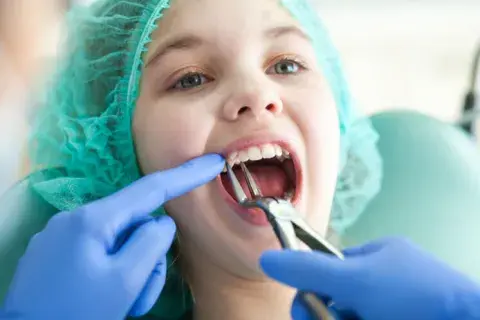
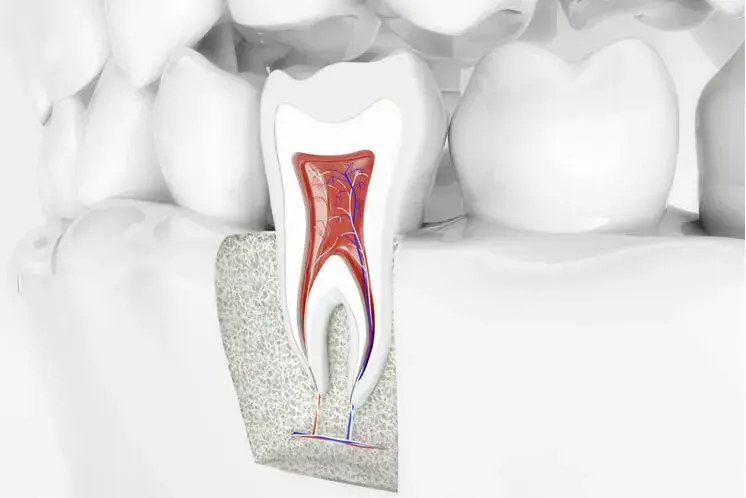
The teeth that are extracted most frequently for orthodontic purposes are the first bicuspid teeth, the premolars. These are the teeth situated just between the canine or fang teeth and the molar or back teeth. But it does not always have to necessarily be the premolars that are taken out, as we will see below.
When is it necessary to remove a tooth?
Teeth crowding
In general terms, when there are too many teeth for the size of the dental arches, it is possible that there is not sufficient space to be able to align them. A common solution is to create the necessary space by removing teeth to allow the rest to be correctly aligned.
In orthodontic treatments, the first phase is to find out what must be done; hence it is essential to take a record and conduct a study to design a good treatment plan.
Not all the cases require extractions; in fact they are generally not necessary. If it is possible to align all the existing teeth in a healthy bite and a correct position, the work will be done without removing teeth, but for certain patients, dental extraction is an effective way to obtain straight teeth with lasting results.
Teeth extraction is only carried out when absolutely necessary: the orthodontist will consider all the options to obtain a nice smile before recommending an extraction.
Vertical reduction
Furthermore, facial aesthetics are an important part of all orthodontic treatment. In many cases, premolars are extracted, not only to relieve crowding, but also to change the facial profile. Supposedly, the extraction of premolars provides a certain vertical reduction.
Extraction procedure
If the tooth is healthy and has completely erupted it can generally be extracted in a simple manner:
The dentist will use a similar tool to forceps to gradually move the tooth forward and backwards until it becomes loose and finally comes away from the bone.
The tooth will always be extracted using a local anaesthetic to ensure that the patient does not feel any pain at all. The recovery is quick and normally no stitches are required.
The degree of crowding and the age of the patient plays an important role in the decision to treat a malocclusion with or without the extraction of permanent teeth.
Which teeth are extracted in each case?
The extracted teeth will vary according to the specific individual needs in each case. A combination of teeth can be extracted. This may include four premolar teeth, two upper or two lower premolar teeth, one single lower incisor or second upper and lower molars. In general terms, any tooth can be extracted from the mouth to help the orthodontist obtain an adequate bite and a soft tissue profile and eliminate the crowding that exists.
Normally to maintain the symmetry it is necessary to extract teeth from both sides of the same arch and even, where appropriate, there are times when it is necessary to extract the corresponding adjacent teeth to keep the occlusal relationship between arches.
The extraction of an uneven number of teeth is common when it is necessary to treat the asymmetry in the bite pattern or traumatic bite.
The wisdom teeth will not be considered in the cases of teeth extraction, since their extraction does not create the space in the mouth needed to eliminate crowding. The molars are moved from the back to the front of the mouth and not the other way around.
The eruption of wisdom teeth often occurs simultaneously with the appearance or increase of anteroinferior crowding. It is a common belief that this is due to the pressure created by the eruption of wisdom teeth. However, the current evidence suggests that wisdom teeth play a minor role, if any, in the late crowding of lower incisors. Therefore, there is no evidence that backs the recommendation to extract wisdom teeth to prevent the late crowding of the incisors.
On deciding which teeth to remove your orthodontist will consider the best way to place the other teeth in their correct healthy positions, with the least alteration possible of the mouth or of the facial form of the patient and the positions of the tongue.

Reducción vertical
Además, la estética facial es una parte importante de todo tratamiento de ortodoncia. En muchos casos se requiere la extracción de premolares, no solo para aliviar el apiñamiento, si no también para cambiar el perfil facial. Supuestamente, la extracción de premolares proporciona cierta reducción vertical.
Procedimiento de extracción
Si el diente está sano y está completamente erupcionado, generalmente se puede extraer de manera simple:
El dentista usará una herramienta similar a un fórceps para mover gradualmente el diente hacia adelante y hacia atrás hasta que se afloje y finalmente se desprenda del hueso.
La extracción se realiza siempre bajo anestesia local para asegurarse de que no sienta nada en absoluto. La recuperación es rápida y lo normal es que no se necesiten puntos de sutura.
El grado de apiñamiento y la edad del paciente juegan un papel importante en la decisión de tratar una maloclusión con o sin extracción de dientes permanentes.
¿Qué dientes se extraen en cada caso?
Los dientes extraídos variarán según las necesidades específicas e individuales de cada caso. Se puede extraer una combinación de dientes, como por ejemplo:
- Cuatro dientes premolares.
- Dos dientes premolares superiores o dos inferiores.
- Un solo diente incisivo inferior o segundos molares superiores e inferiores.
En términos generales, se puede extraer cualquier diente de la boca para ayudar al ortodoncista a lograr una mordida adecuada y un perfil de tejido blando y eliminar el apiñamiento que existe.
Normalmente, para mantener la simetría es necesario extraer piezas a ambos lados de la misma arcada, e incluso, según el caso, hay veces que hay que extraer los dientes correspondientes adyacentes para mantener la relación oclusal entre arcadas.
La extracción de un número impar de dientes es común cuando hay que tratar la asimetría en el patrón de mordida o la mordida traumática.
Las muelas del juicio no se consideran en los casos de extracción de ortodoncia, ya que su extracción no crea el espacio en la boca necesario para eliminar el apiñamiento. Los molares se mueven de atrás hacia adelante de la boca y no al revés.
La erupción de las muelas del juicio a menudo ocurre simultáneamente con la aparición o aumento del apiñamiento anteroinferior. Es una creencia común que esto se debe a la presión creada por la erupción de las muelas del juicio. Sin embargo, la evidencia actual sugiere que las muelas del juicio juegan un papel menor, si lo hay, en el apiñamiento tardío de los incisivos inferiores. Por lo tanto, no hay evidencia que respalde la recomendación de extraer las muelas del juicio para prevenir el apiñamiento tardío de los incisivos.
Al decidir qué dientes quitar, su ortodoncista considerará la mejor manera de colocar los otros dientes en sus posiciones correctas y saludables, con la menor alteración posible de la boca o la forma facial del paciente y las posiciones de la lengua.Si quieres conocer si tu hijo/a puede necesitar una extracción de premolares, puedes completar ahora nuestro test rápido de ortodoncia infantil. Además, también es posible reservar una cita online haciendo clic en la siguiente imagen:

Contenido supervisado por nuestro equipo médico
Graduated in Dentistry in 2003. Medical Director at Clínica Dental Adeslas since 2012.
Henar Artiz Sanmartín, registration number 28007122. She has a distinguished career in dentistry and currently leads the Medical Management of Clínica Dental Adeslas since 2012.
Graduated in Dentistry from Universidad Alfonso X el Sabio in 2003, she has dedicated her career to private practice, specialising in general dentistry and implant-prosthetics.
Her training is complemented by two master's degrees: one in Oral Implantology, Surgery and Prosthetics from the Universidad de Alcalá de Henares, obtained in 2006, and another in Clinical Management, Medical and Healthcare Management from Tech Institute in 2022.
She has further expanded her knowledge through a series of courses and diplomas, including a University Diploma in Oral Medicine from the Universidad de Sevilla, training in Expert Assessment and Damage Evaluation in Dentistry, Dental Aesthetics, Conscious Sedation with Nitrous Oxide and CPR in Dentistry, venepuncture and blood extraction techniques in dentistry, Lower Facial Third Fillers with Hyaluronic Acid, and the First Fit Certification.
Her commitment to excellence and continuous professional development make her a leading professional at Clínica Dental Adeslas.